CoolTown Tips
Taming the Humidity Beast: A Southwest Florida Survival Guide

**Taming the Humidity Beast: A Southwest Florida Survival Guide**
By John Farnsworth – Mr. Quick Fix HVAC
Hey Southwest Florida – whether you’re teeing off at Tiburon, jogging down Vanderbilt Beach Road, or loading pallets in a North Naples warehouse – this one’s for you.
The Weather Channel just showed Tiburon at 78 °F, dew point 72 °F. That’s 97 % humidity. Your shirt sticks before you finish the backswing. NOAA says we average 74–78 % year-round, summer spikes to 95 %. Warm air rises – humidity climbs about 3 % every 10 feet. Your living room floor might read 55 %, but the ceiling vents hit 62 %. Attic? 150 °F and 80 % humid if soffits are clogged. One leaky duct and that soup pours straight into your bedroom.
**Six Fun Facts About Humidity in Southwest Florida**
1. The Gulf doesn’t rain – it exhales. 55 inches a year, half in 90-minute storms. The rest just hangs there like steam from a lobster pot.
2. Manatees don’t swim in our rivers – they float on power-plant outflows. Water below 74 °F gives them cold-stress syndrome; they don’t survive. (Florida Fish & Wildlife)
3. Attics hit 150 °F in July, 80 % humid. One leaky duct turns your bedroom into a greenhouse overnight. (Florida Solar Energy Center)
4. A six-inch door crack can stop 5–10 % of humidity sneaking in. Tiny fix, big win.
5. Your AC coil is a sponge. Run the fan too fast – no squeeze ( No moisture removal). Too slow – freezes solid. Balance it or drown.
6. Oysters clamp shut when humidity drops too low – they crack. Down here they stay wide open. Lucky shells.
**The Ice-Cube Test – Zero Tools, 100 % Accurate**
Glass of room-temp water, two ice cubes, five minutes on the counter (away from vents).
- Heavy sweat = over 60 % – too humid
- Bone dry = under 30 % – too dry
- Light ring = 30–50 % – you’re golden
**Real Meters Worth Owning**
- ThermoPro TP50 https://amzn.to/3KKVrtN – $15 on Amazon, reads humidity + dew point + temp (4.6 stars, 50k+ reviews)
- Govee H5075 Bluetooth https://amzn.to/4rLMrW8 – $15, app pings your phone when it climbs (4.7 stars)
**Airflow Is Everything**
Your AC has to breathe. Static pressure over 0.5 in. w.c. = coil freezes, no humidity removal. Dirty filter, crushed flex, couch on the return – all killers. We check it with a manometer. Most homes run 0.3–0.4 – perfect.
**The Door-Slam Test – Six Inches**
Crack a bedroom door six inches while the AC runs. If it slams shut, negative pressure is sucking humid Gulf air through every crack. Fix: leave doors cracked, undercut the bottom, or install quiet pass-through vents (top or bottom of door). We carry them – five-minute install, doors stay closed, air moves silently.
**Refrigerant & Fan Speed**
Wrong charge or fan speed kills dehumidification. Too low – coil warms, air slips by. Too high – coil floods. Too fast – no moisture sticks. Too slow – coil ices. During a tune-up, if the tech spots imbalance, you’ve got the option to correct it right then or schedule the full repair with multiple ways to get it balanced – no single path, no surprises.
**Business Breakdown**
- Kitchens: Hood pulls steam – unconditioned makeup air floods back at 80 %. Add a conditioned makeup-air handler.
- Warehouses: HVLS fans (16- or 24-ft Mr. Cool we sell them too!) move air, don’t dry it. Pair with a zoned commercial dehumidifier (200+ pints/day). Seal docks, timed ventilation.
- Offices: Closed doors + printers = 55–65 % fast. Zone it – steady humidity, happy eyes.
**When to Call Us**
Vents dripping? Doors slamming? Attic leaking? We’ll check static pressure, seal ducts, balance refrigerant, and give you real options – pass-through vents, jump ducts, whole-house dehumidifiers – no hard sell. Text or call anytime. We love helping people breathe.
Sources (so you know it’s real)
- NOAA Climate Normals & WeatherSpark – Naples humidity/dew point data
- Florida Fish & Wildlife – manatee cold-stress facts
- Florida Solar Energy Center – attic temperature/humidity studies
- EPA Indoor Air Quality Guide 2025 – 30–50 % recommendation
- ASHRAE 62.1 & Humidity Control Design Guide – airflow, static pressure, stratification
- CDC Moisture & Mold Program – health effects
- Amazon product ratings – current as of Dec 2025
HVAC Tips
Get real facts, actionable advice from a seasoned pro who knows air conditioning systems inside and out. We share practical tips to help you maintain your HVAC system, improve air quality, and save on energy costs. No fluff, just straightforward fixes that work.
How often should I change my air filter?
In Southwest Florida's swampy air, change your AC filter every thirty to sixty days-monthly if you've got pets, kids, or allergies, every ninety if your house is a dust-free bunker. Dirty ones choke your system, spike bills ten to fifteen percent, and turn your vents into a petri dish. Pro tip: Snap a phone pic of the clean one labeled with the date, or Sharpie it right on the frame. Need premium pleated filters? We stock 'em at bulk rate-no delivery fee on your first service.
What are signs my AC needs servicing?
In Southwest Florida, your AC needs service if it rattles like palmetto bugs in a dryer, you set it to seventy-two and it still reads eighty-three, or your bill jumps twenty bucks. Could be refrigerant leak, could be a squirrel nest in the ducts. Ignore it and you'll sweat like a sinner in July.
How can I improve indoor air quality?
In Southwest Florida, your AC needs service if it rattles like palmetto bugs in a dryer, you set it to seventy-two and it still reads eighty-three, or your bill jumps twenty bucks. Could be refrigerant leak, could be a squirrel nest in the ducts. Ignore it and you'll sweat like a sinner in July.
What should I do if my AC is blowing warm air?
If your AC blows warm air, first check the air filter-swap if it's clogged. Then turn thermostat from cool to off, fan to on, and leave it thirty minutes so any ice can melt. While that's happening, go outside and see if water's dripping from the drain line-if not, vacuum it out with a wet-dry vac. After thirty minutes, flip breakers off thirty seconds, back on-give it five minutes, then set back to cool. Now listen: is the compressor humming and the outdoor fan pushing warm air hard? If not, or if it's still warm inside, call us. No guessing.
How can I save on energy costs?
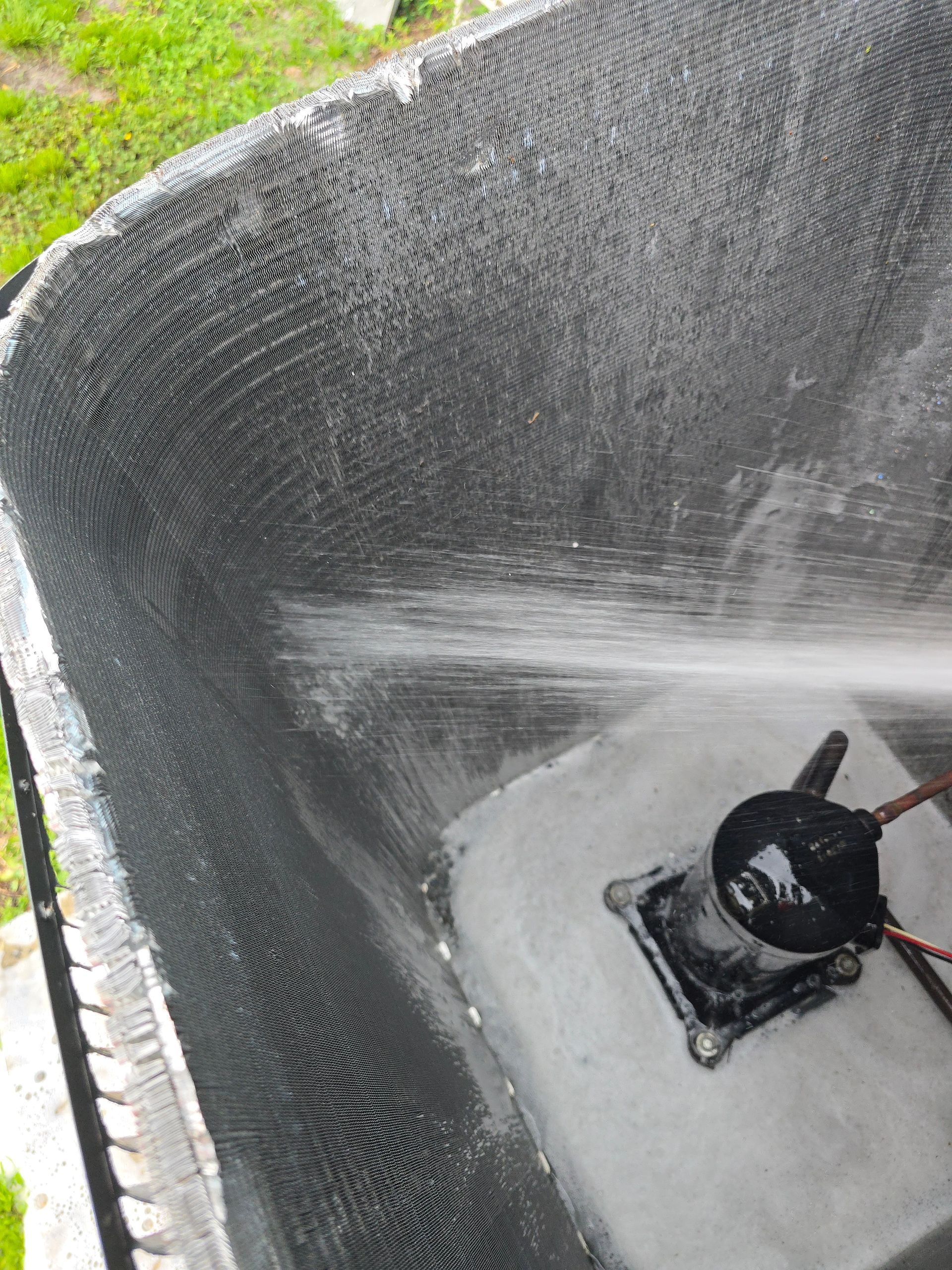
Regular tune-ups are like changing your oil before the engine grenades-saves 15 percent on the bill and a thousand on repairs. Seal leaks so the cool air doesn't vanish-tape ducts, caulk windows. Set a programmable thermostat: seventy-six when you're home, seventy-eight when you're gone. It'll learn your routine so you don't have to babysit it. Down here, every degree under seventy-six is money down the drain-according to the EPA, it can hike cooling costs by 3 to 5 percent per degree.
How long should my system last here in SWFL?
### Government & Non-Profit Sources
- **U.S. Department of Energy (DOE)**: National average for central AC/heat pumps is 15 years, but in hot/humid regions like Florida, expect 10–15 years due to extended operation (10–11 months/year) and efficiency loss from humidity/corrosion. Proper maintenance adds 3–5 years.
- Source: DOE's "HVAC Systems" guide (2023 update).
- **ENERGY STAR (DOE/EPA)**: In coastal/humid areas, salt air and high runtime shorten life by 20–30%; bi-annual tune-ups boost efficiency by 15% and extend lifespan.
- Source: ENERGY STAR HVAC factsheet (2024).
- **Air Conditioning, Heating, and Refrigeration Institute (AHRI)**: Well-maintained units in humid climates last up to 20% longer (e.g., 12–18 years), but neglect cuts it to under 10 years; coastal corrosion is a key factor.
- Source: AHRI Standard 210/240 performance study (2022).
### Academic/Scientific Studies
- **NREL (National Renewable Energy Laboratory) Report**: In hot-humid climates, HVAC systems face 25–40% more strain from dehumidification needs, reducing lifespan by 3–5 years; recommends enhanced controls for coastal areas to mitigate mold and coil degradation.
- Source: "Advanced HVAC Humidity Control for Hot-Humid Climates" (NREL/TP-5500-83357, 2024).
- **ScienceDirect Peer-Reviewed Paper**: Future climate projections show extreme humidity in coastal U.S. (like FL) increasing HVAC wear by 27–47% by 2050, with current systems in humid zones averaging 10–14 years due to overwork.
- Source: "Future climate scenarios and their impact on HVAC system design" (Renewable & Sustainable Energy Reviews, 2022).
Stay Informed
Subscribe to our tips and stay ahead of HVAC issues. Our expert insights will help you keep your system running smoothly and efficiently.